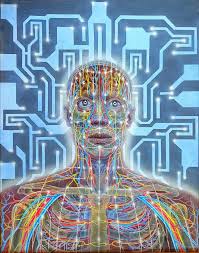
Holy Monday is not just a religious day. It is an inner experience. It is a call to enter the temple of your own being and face your truth honestly—without excuses, without fear. The message of this day is simple but powerful: you are called to clean your inner world.
Easter is Not an Event — It is a State of Being
Easter (Pascha or Passover), in its deepest spiritual sense, is not merely a historical remembrance or religious celebration. It is a living inner state, a passage that every human being must undergo.
It is a transition of consciousness.
According to the text, Pascha is:
- A spiritual condition
- A total inner experience
- A process lived in its fullness
This means that Easter is not something that happens once, but something that unfolds within the soul when it becomes ready.
It is the moment when the human being begins to move from:
- unconscious existence → conscious being
- fragmented awareness → unified truth
- dormant life → awakened life
The Veil of Ignorance Must Break
We emphasize a crucial obstacle: ignorance.
Human beings do not understand what is happening within them. They misinterpret their inner experiences, assigning false causes and meanings.
This ignorance acts like:
- a veil
- a barrier
- a distortion of reality
Passover begins when:
- the veil is torn
- the inner horizon opens
- truth replaces illusion
This is not gentle—it is described as a necessary shock, a shaking of the inner structure:
The Divine Light descends and causes the required inner upheaval for transformation.
So Easter is not comfort—it is awakening.
The Awakening of the Dormant Divine Seed
Within every human exists what the text calls a “spermatical life”—a seed of true Life that has remained inactive.
Easter (Passover) is the moment when:
- this seed awakens
- latent divinity becomes active
- inner life becomes conscious
This means:
- You are not becoming something new
- You are activating what already exists within you
The tragedy of humanity is not lack of divinity, but lack of activation.
Easter is activation.
The Inner Exodus: From Death to Life
Passover is a passage from death to Life—not physical death, but existential death.
This “death” is:
- separation from truth
- bondage to illusion
- identification with the limited self
Easter is described as:
- liberation from bonds
- release from death
- entry into Divine Life
It is the sealing of the soul in a new state:
- protected from inner destruction
- aligned with eternal life
- rooted in divine reality
This is why Easter is called:
“The Passover of the souls… their salvation, their liberation, their delivery into Divine Life.”
The Inner Resurrection
The culmination of Easter is Resurrection—but again, not merely symbolic or historical.
Resurrection is:
- the awakening of true identity
- the emergence of the Divine Self
- the union with the Source
It is described as:
- a conscious journey toward Eternity
- a conscious movement toward union with Divinity
Easter becomes real only when it is consciously lived.
The Passover of Love
Another profound dimension appears:
Passover is not only liberation—it is transformation into Love.
It is:
- a sign of Love given to the soul
- an expression of Love from the soul
- a beginning of becoming Love itself
This means the goal is not just salvation—but transfiguration.
The human being does not merely receive Love—
they become Love in essence.
The Inner and Outer Contrast
A striking image:
- Outside: fear, death, instability
- Inside (the awakened being): peace, certainty, eternal life
This reveals a key spiritual truth:
Easter does not necessarily change the external world first—
it changes your relationship to it.
You may still live in a world of chaos,
but within you:
- there is protection
- there is clarity
- there is life
The Call of Easter
Pascha is ultimately a call:
- to awaken
- to break illusions
- to accept transformation
- to consciously walk toward union
It is not passive.
It requires:
- openness to inner upheaval
- willingness to see beyond illusions
- surrender to Divine Light

Beloved,
Holy Monday is not just a religious day. It is an inner experience. It is a call to enter the temple of your own being and face your truth honestly—without excuses, without fear.
The message of this day is simple but powerful:
you are called to clean your inner world.
Just as Christ enters the temple and overturns everything false and impure, you are invited to enter your own inner “temple”—your heart and mind—and remove whatever is not true. Look at your thoughts, your desires, your intentions, and transform them.
Holy Monday is the beginning of inner cleansing.
You are not asked to judge yourself, but to understand yourself.
You are not asked to reject parts of you, but to transform them.
You are not asked to fight darkness, but to bring light.
Because light reveals—and at the same time heals.
At its core, this day is an invitation:
to move from surface to essence,
from illusion to awareness,
from separation to unity.
The person who accepts this call begins to consciously participate in the divine work within. You start to realize that the “temple” is not outside you—it is within you. And every thought, every action, every feeling either brings clarity or creates confusion.
Holy Monday tells you:
Pause.
Look.
Cleanse.
Be renewed.
Do not be afraid to face what is inside you. Wherever there is truth, there is the possibility of transformation. Wherever there is awareness, freedom is born.
Because the goal is not just to “fix” yourself,
but to reveal your true Self.
And that true Self is Light, Love, and Unity.
Let Holy Monday become the beginning of your inner journey—a journey back to purity, truth, and the living presence of the Divine within you.

Holy Week is not just a remembrance of sacred events. It is a living inner journey that each person is invited to walk within themselves. In the spirit of “In the Illumination of the Human Being,” the events of this week reveal stages of inner transformation—steps of the soul toward the resurrection of Light.
1. The Entry – The Awakening of the Soul
Christ’s entry into Jerusalem symbolizes the moment when a person allows the Divine to enter their heart.
It is the beginning of awakening—when the soul recognizes the Light and welcomes it with hope.
But this welcome can be unstable. The same crowd that praises can later reject.
This teaches us that the spiritual path requires steadiness, not just emotional enthusiasm.
2. The Cleansing – Clearing the Inner Temple
The cleansing of the Temple shows the need for inner purification.
The Temple is the human heart, and the merchants represent thoughts, attachments, and desires.
Illumination begins when a person dares to clear their inner space and remove what does not belong to the Divine.
Without this cleansing, true transformation cannot happen.
3. The Last Supper – Union with the Divine
The Last Supper represents the mystery of unity.
It is not only a ritual, but an inner experience of connection with Christ.
“Take and eat” means: allow the Divine to become part of you.
Become one with the Light.
Here, the soul moves from simply understanding to actually experiencing unity.
4. Gethsemane – The Inner Struggle
In the garden of Gethsemane, we see the deep inner struggle.
This is the moment every soul faces—between personal will and Divine will.
“Let Your will be done” is the point where the ego begins to surrender.
It is where the soul chooses trust over control.
Without this surrender, the journey cannot be completed.
5. The Crucifixion – Letting Go of the Ego
The Crucifixion is the central mystery of Holy Week.
It is not only about Christ’s suffering, but about our own transformation.
The nails represent attachments.
The cross represents life itself.
The sacrifice is the release of the ego.
Through this, a person moves from living in the ego to living in the Spirit.
6. The Burial – Silence and Stillness
The burial symbolizes a period of silence.
It is the stage where everything seems lost or empty.
Yet, in this silence, something deep is happening.
This emptiness is not an end—it is preparation.
It is the quiet before the birth of a new self.
7. The Resurrection – Inner Illumination
The Resurrection is not only an event—it is a state of being.
It is when Light fully overcomes darkness within a person.
The one who “rises” is no longer the same.
They are transformed.
They become a bearer of Light.
Illumination is the realization that the Divine is not outside, but within.
Closing – The Ongoing Holy Week
Holy Week does not end with Easter.
It is a continuous process within us.
At any moment, we may be in:
- awakening,
- cleansing,
- union,
- struggle,
- surrender,
- silence,
- or resurrection.
The one who walks this path becomes the living meaning of Easter—a passage from darkness into Light.
And then, illumination is no longer just a teaching—it becomes a lived reality.